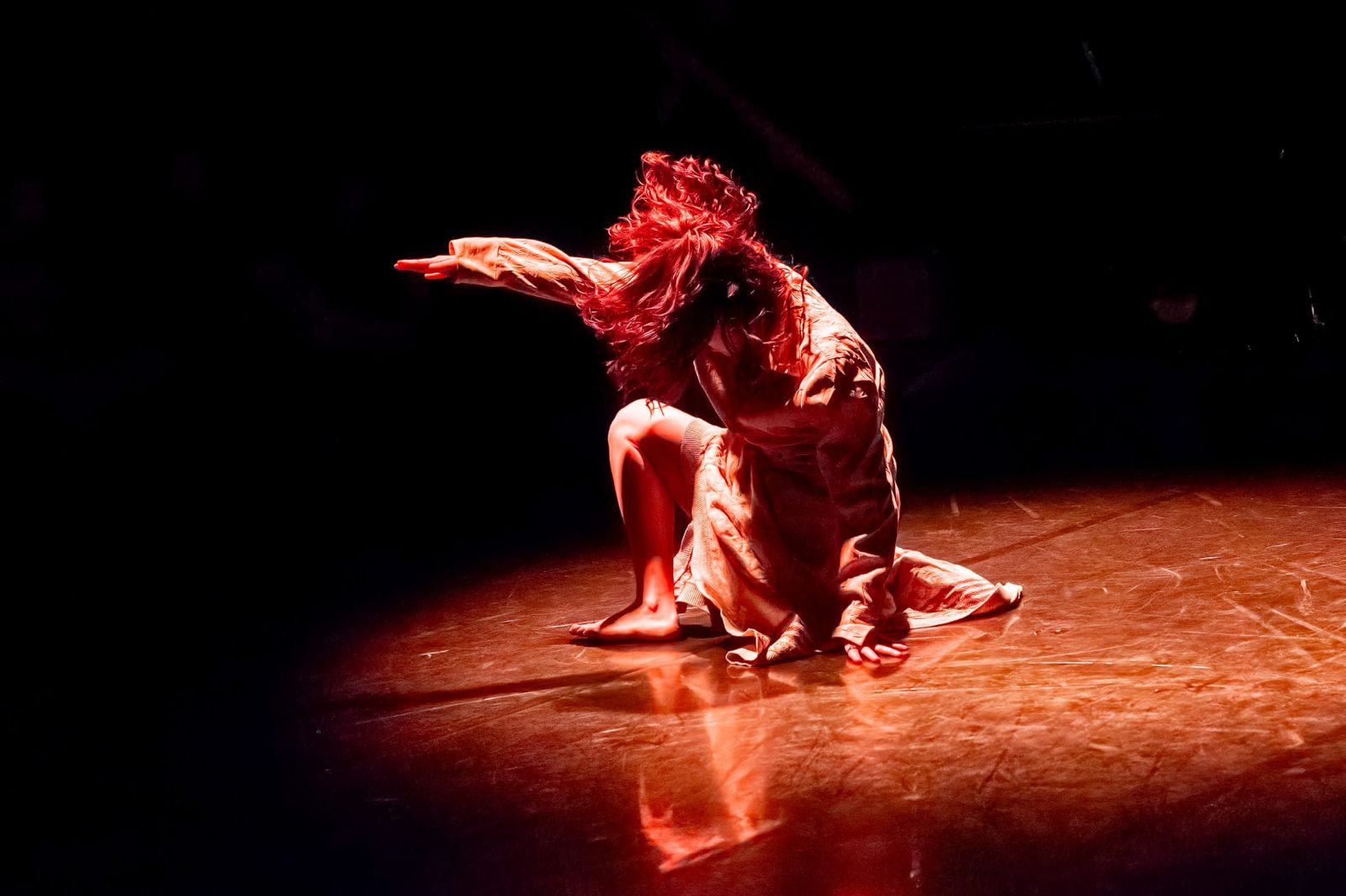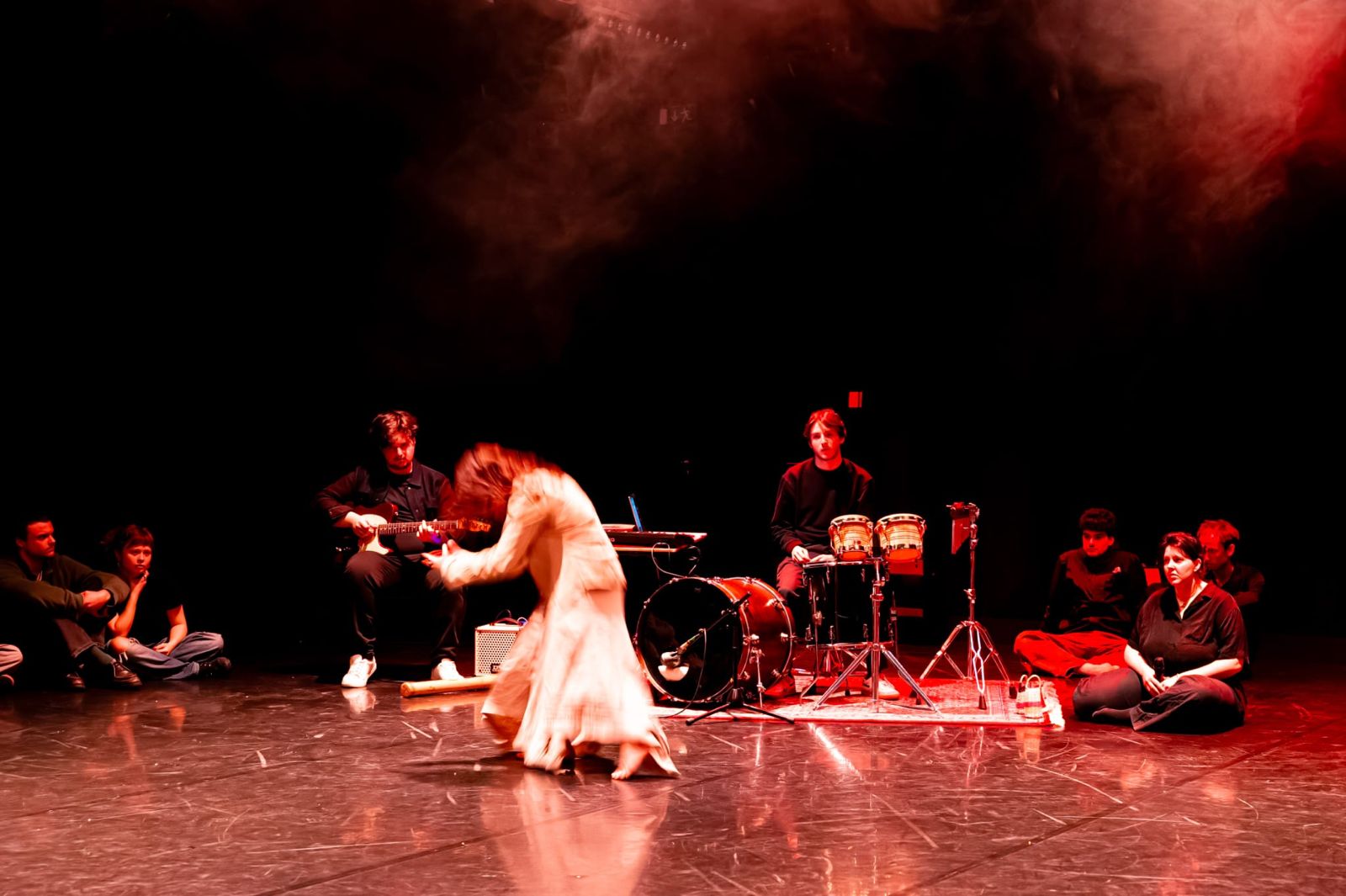
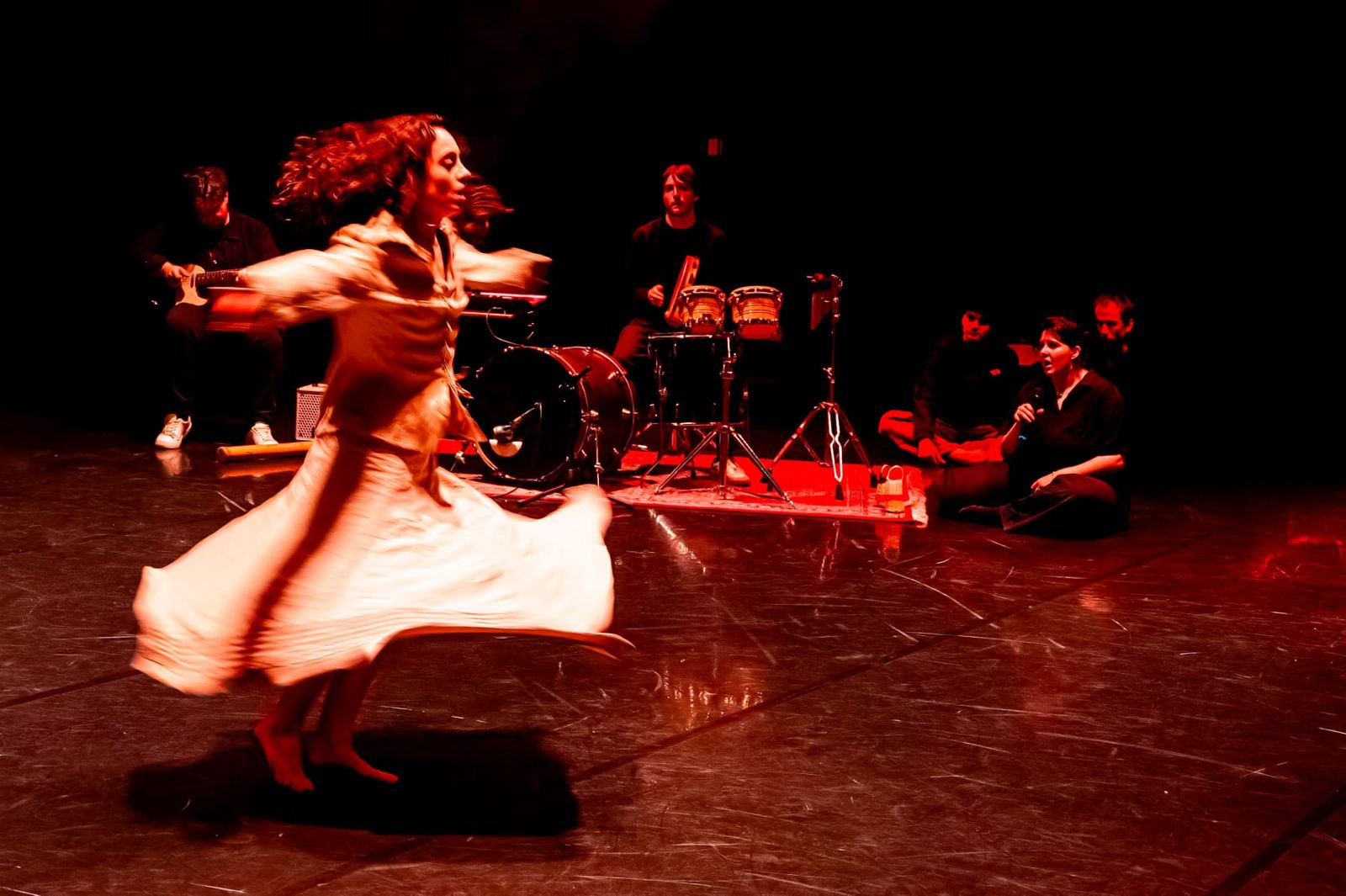
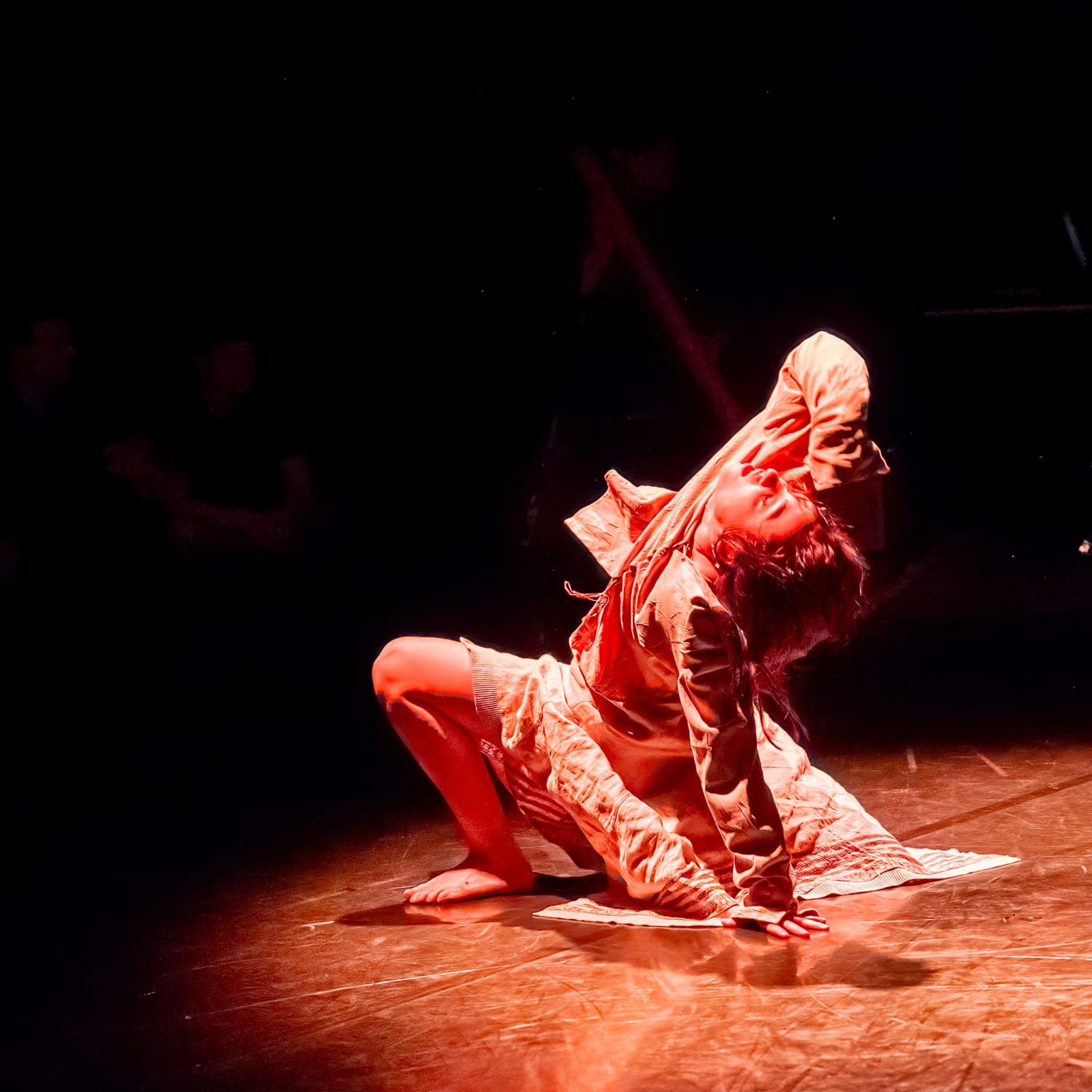
Movement carries memory, and bodies hold history.
In the XIV century, the phenomenon of Tarantism was expanding in South of Italy. Women were using dance as a cathartic and healing practice and as an outlet for repressed emotions and suAering in patriarchal and authoritarian societies that silenced them. In modern society, dance is an equal vital tool, creating spaces where marginalized voices can be heard, not through words but through the body.
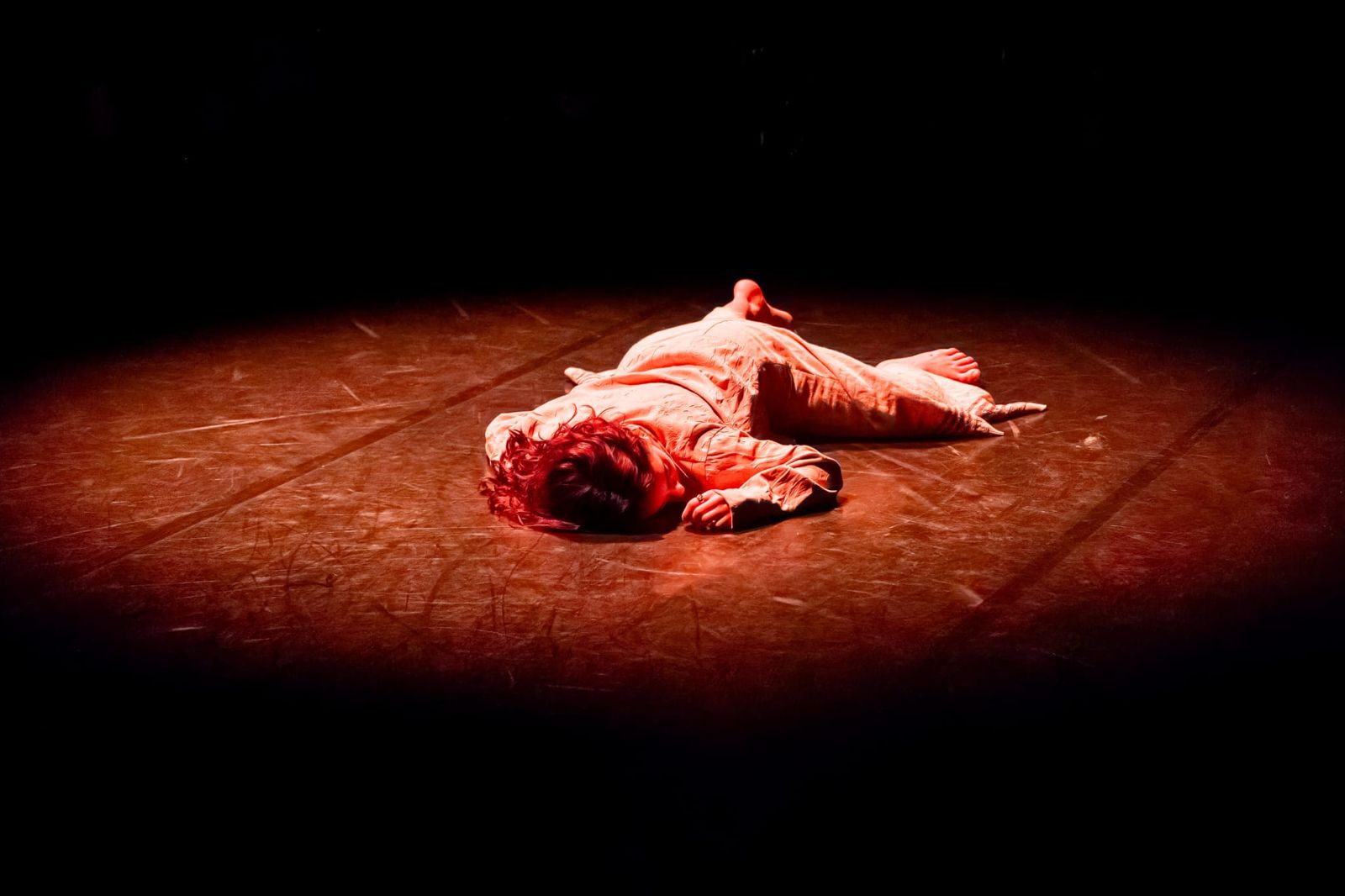
“Dancing The Poison Out” is a dance-trance ritual. It’s about awakening the soul rather than dancing with the body. It’s about letting the spirit break free and release what is often repressed. The body becomes a conduit for the soul’s voice, revealing through dance truths, desires, and emotions. There’s should be no fear nor shame of speaking your own truth, particularly in the face of oppression.
The piece is a reinterpretation of this so-called “musical exorcism”.
In the title, the word “Poison” is a key word. Going back to the time of Tarantism, it refers to the bite of the spider and the belief that his poison was causing the victim symptoms like weakness, anxiety, depression, hysterical crisis, paranoia etc…. causing the victim, usually a woman, to engage in frenzied dance to prevent death. But “Poison” is equally a metaphor of the poison of society. Societal and cultural forces that suppress personal freedom, particularly for marginalized communities. Patriarchal norms that restrict women’s expression. Self-destructive thoughts. Collective trauma such as gender-based violence, racism, colonialism.